4.6 / 5 Based on Reviews
“The Only Neapolitan Pizza That Matters: A Love Letter to the Real Deal”
There’s something almost sacrilegious about calling a pizza “authentic” when you’ve never stepped foot in Naples. It’s like calling yourself a poet because you wrote one decent haiku in college. Neapolitan pizza isn’t just a meal—it’s an institution, a way of life, a birthright handed down from the gods of flour and fire. It’s a lesson in simplicity, an argument for patience, and a brutal reminder that most of what the world considers “pizza” is, frankly, a lie.
The first time I ate real Neapolitan pizza, I was standing in a cramped alleyway just off Spaccanapoli, the lifeblood of Naples. The place wasn’t fancy—just a hole in the wall where a man with forearms like tree trunks and a face weathered by decades of flour dust stretched dough with the casual arrogance of someone who knows he’s the best at what he does.
No measuring cups. No timers. Just instinct.
He pressed the dough outward, fingers moving with the confidence of a surgeon. A quick ladle of San Marzano tomatoes, a handful of torn mozzarella, a single basil leaf. And then, the moment that separates the masters from the amateurs—the flick of the wrist that sent the pizza flying into the dome of a 900-degree wood-fired inferno. The oven roared, flames licking the crust as it bubbled and blistered.
Ninety seconds. That’s all it took.
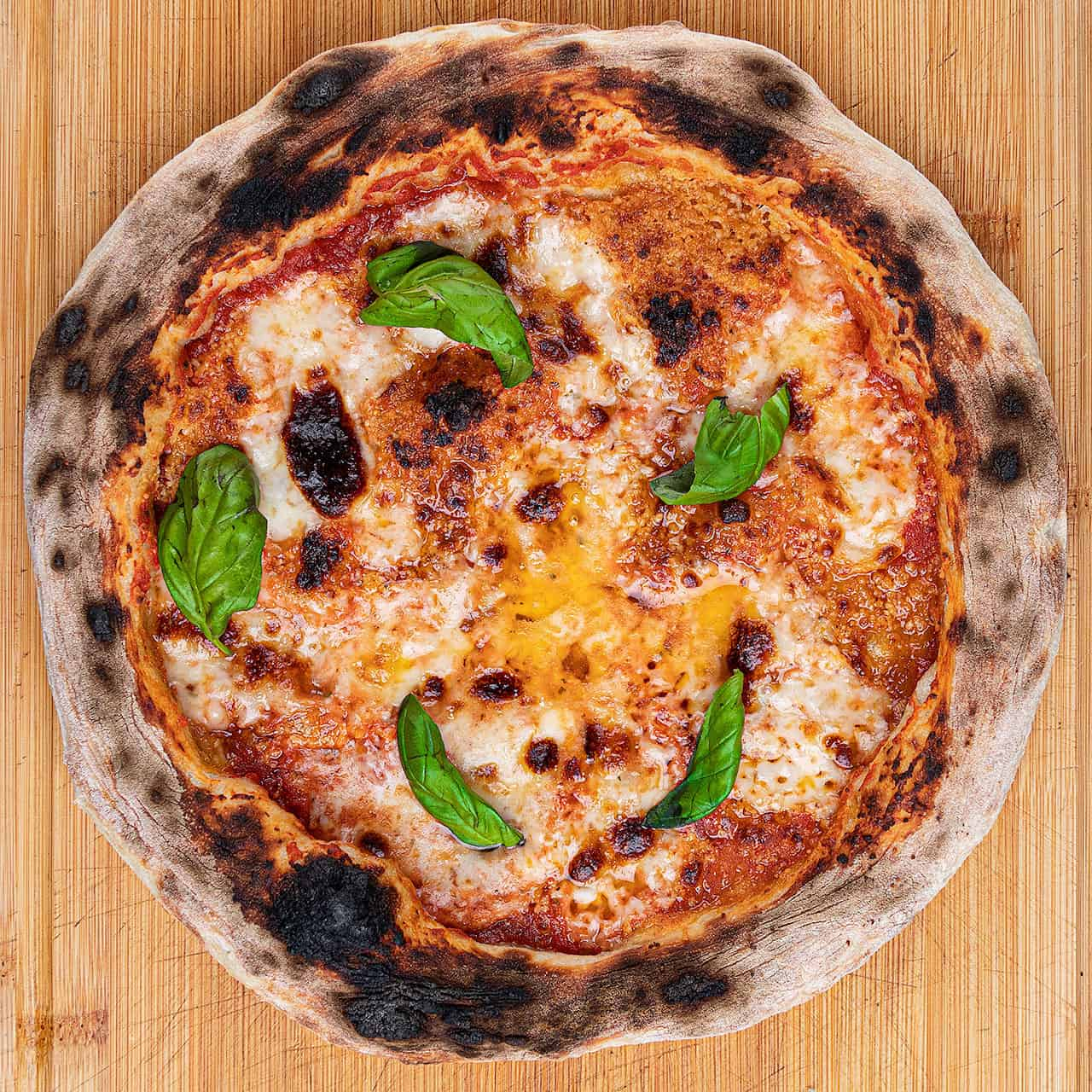
What came out wasn’t food—it was poetry. The crust was leopard-spotted with char, the cheese had melted into the sauce in a way that can only be described as divine intervention, and the whole thing smelled like an ancient ritual. One bite in, and I understood why Neapolitans get territorial about their pizza. It wasn’t just good. It was the truth.
The Religion of Fire and Flour
Neapolitan pizza isn’t meant to be neat. It’s not cut into neat little squares or smothered in a buffet of toppings that would make an Italian grandmother weep. It’s meant to be messy, a little wild, something you eat with both hands, letting the sauce drip down your wrist like some kind of primal communion.
And the dough—it’s alive. You don’t just make Neapolitan dough. You negotiate with it. You let it ferment, coaxing it into the perfect balance of strength and elasticity. Too much yeast, and it’ll rise too fast, losing that delicate chew. Too little, and it becomes a dense, sad imitation of what it could have been.
And then there’s the heat. If your oven isn’t screaming hot, you’re not making Neapolitan pizza—you’re making flatbread with sauce. The fire is everything. It’s what gives the crust its signature char, that slight bitterness that plays against the sweetness of the tomatoes. Without fire, Neapolitan pizza is just a theory.
The Problem with “Neapolitan-Inspired”
There’s no shortage of people trying to “improve” Neapolitan pizza. They add garlic to the sauce, drizzle it with truffle oil, or, God forbid, throw pineapples on it. They take something that’s already perfect and weigh it down with nonsense, turning it into a Frankenstein’s monster of unnecessary complexity.
The beauty of Neapolitan pizza is that it doesn’t need any of that. It’s four ingredients: flour, water, salt, and yeast. Maybe a little olive oil if you’re feeling rebellious. That’s it. No sugar, no gimmicks, no shortcuts. The sauce isn’t cooked. The toppings aren’t excessive. It’s a lesson in restraint, in trusting the process, in letting the ingredients do the talking.
And yet, people keep trying to fix what isn’t broken. They bake it too long, suffocating the crust. They drown it in cheese, mistaking excess for luxury. They slap on toppings that have no business being there, as if more somehow equals better.
It doesn’t.
The Neapolitan Pizza You Can Make at Home
Let’s get one thing straight: unless you’ve got a 900-degree wood-fired oven in your backyard, you’re already at a disadvantage. But that doesn’t mean you can’t come close. It just means you have to be smart.
It starts with the dough—properly fermented, stretched by hand (never rolled), and light enough to be both crisp and chewy. The sauce? Raw San Marzano tomatoes, crushed by hand, salted just enough to wake them up. The cheese? Fresh mozzarella, torn—not shredded, never shredded.
And then, the bake. If you don’t have a pizza oven, crank your home oven to its absolute limit. Get a pizza stone or steel, let it preheat for an hour, and embrace the heat. If your smoke alarm doesn’t go off at least once, you’re doing it wrong.
Will it be exactly like the one you get in Naples? Probably not. But will it be better than 99% of the pizza you’ve had in your life? Absolutely.
Because Neapolitan pizza isn’t about perfection. It’s about passion. It’s about getting your hands dirty, trusting the fire, and understanding that sometimes, the simplest things are the hardest to master.
So make the dough. Fire up your oven. And whatever you do—don’t reach for the pineapple.
Ingredients (Makes 2-3 Pizzas, depending on size)
For the Dough:
- 500g (about 3 ½ cups) “00” flour (or all-purpose flour, if “00” isn’t available)
- 325ml (about 1 ⅓ cups) lukewarm water (around 95°F/35°C)
- 10g (about 2 tsp) fine sea salt
- 3g (about 1 tsp) active dry yeast (or 6g fresh yeast)
For the Toppings:
- 400g canned San Marzano tomatoes (or high-quality crushed tomatoes)
- 250g fresh mozzarella (preferably mozzarella di bufala campana, but fior di latte works too), drained and torn into small pieces
- Fresh basil leaves (about 8-10 leaves per pizza)
- Extra virgin olive oil (about 1-2 tbsp per pizza)
- Salt (to taste for the sauce)
Equipment Needed:
- A large mixing bowl
- A kitchen scale (for precise measurements)
- A clean work surface
- A rolling pin or your hands (for shaping)
- A pizza peel (or a large flat baking sheet)
- A pizza stone or steel (highly recommended for authentic results)
- An oven (preheated to the highest temperature, ideally 500°F/260°C or higher, if possible)
- Semolina flour or cornmeal (for dusting the peel)
Step-by-Step Instructions
1. Prepare the Dough (Start 8-12 Hours Ahead)
- Activate the Yeast: In a small bowl, combine the lukewarm water and yeast. Stir gently and let it sit for 5-10 minutes until it becomes frothy.
- Mix the Dough: In a large mixing bowl, combine the flour and salt. Make a well in the center and pour in the yeast mixture. Mix with a spoon or your hands until a shaggy dough forms.
- Knead the Dough: Transfer the dough to a lightly floured surface and knead for about 8-10 minutes until smooth and elastic. The dough should be soft but not sticky.
- First Rise (Bulk Fermentation): Shape the dough into a ball, place it in a lightly oiled bowl, cover with a damp cloth or plastic wrap, and let it rise at room temperature for 2 hours. After 2 hours, transfer it to the refrigerator for 6-10 hours (or overnight) to develop flavor. This slow fermentation is key to an authentic Neapolitan crust.
2. Shape the Dough
- Divide the Dough: Remove the dough from the refrigerator about 1-2 hours before baking to bring it to room temperature. Divide it into 2-3 equal portions (about 250-300g each, depending on desired pizza size).
- Form Balls: Shape each portion into a smooth ball by tucking the edges under and rolling it on a clean surface. Place the balls on a lightly floured tray, cover with a damp cloth, and let them rest for 1-2 hours until they puff up slightly.
3. Prepare the Tomato Sauce
- Crush the Tomatoes: Drain the San Marzano tomatoes and crush them by hand or with a fork in a bowl. Avoid using a blender, as you want a chunky, rustic texture. Season lightly with a pinch of salt. No cooking is needed—just set the sauce aside.
4. Preheat Your Oven
- Place your pizza stone or steel on the middle or upper rack of your oven. Preheat the oven to its highest setting (ideally 500°F/260°C or higher) for at least 45 minutes to 1 hour. If you have access to a wood-fired pizza oven, heat it to around 800°F-900°F/425°C-480°C.
5. Shape and Stretch the Dough
- Dust Your Work Surface: Lightly dust a work surface with flour or semolina flour to prevent sticking.
- Stretch the Dough: Take one dough ball and gently press it into a flat disc with your fingers, leaving a thicker edge (about 1 inch) around the perimeter for the crust. Stretch the dough carefully by hand, rotating it, until it’s about 10-12 inches in diameter. Avoid using a rolling pin, as it can deflate the air pockets needed for a light, airy crust.
6. Assemble the Pizza
- Add the Sauce: Spread a thin layer of the crushed tomato sauce over the dough, leaving the outer edge (crust) bare.
- Add the Cheese: Distribute the torn fresh mozzarella evenly over the sauce.
- Drizzle Oil: Lightly drizzle 1-2 tablespoons of extra virgin olive oil over the top.
7. Transfer to the Oven
- Use the Pizza Peel: Sprinkle semolina flour or cornmeal on a pizza peel or flat baking sheet to prevent sticking. Carefully slide the pizza onto the peel. Give it a quick shake to ensure it’s not stuck.
- Bake: Slide the pizza onto the preheated pizza stone or steel. Bake for 6-8 minutes in a conventional oven (or 90-120 seconds in a wood-fired oven) until the crust is puffed, golden, and slightly charred, and the cheese is melted and bubbly. Rotate the pizza halfway through for even cooking.
8. Finish and Serve
- Add Basil: Remove the pizza from the oven and immediately place fresh basil leaves on top.
- Slice and Enjoy: Let the pizza cool for a minute, then slice and serve immediately. Neapolitan pizza is best enjoyed hot, with its soft center and crispy, slightly charred crust.
Tips for Authenticity:
- Use Quality Ingredients: Authentic Neapolitan pizza relies on high-quality “00” flour, San Marzano tomatoes, fresh mozzarella, and fresh basil.
- Achieve the Char: The charred spots on the crust come from high heat. If your oven doesn’t go above 500°F, the char may be less pronounced, but the flavor will still be delicious.
- Don’t Overload: Keep toppings minimal to maintain the delicate balance of flavors and allow the crust to cook properly.
This recipe captures the essence of a traditional Neapolitan Margherita pizza, perfect for enjoying at home with friends and family. Buon appetito!
 The Delicate Dish
Leave a comment