4.8 / 5 Based on Reviews
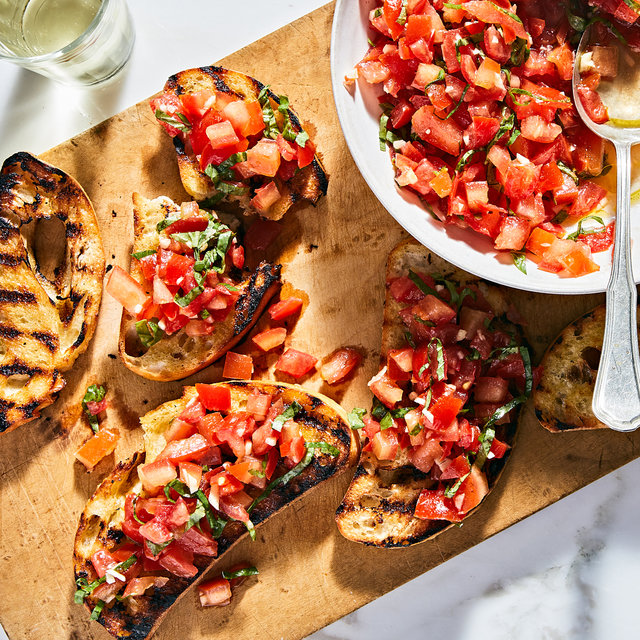
“Bruschetta: The Simplicity That Breaks You”
There’s something about bruschetta that pisses off the pretentious. It’s too simple, too effortless. No one’s reinventing the wheel here—just toasted bread, tomatoes, olive oil, garlic, salt. That’s it. You don’t need a Michelin star, a sous-vide machine, or tweezers to plate it. It’s peasant food, and that’s exactly what makes it beautiful.
Like all the best things, bruschetta wasn’t born out of luxury—it came from necessity. From Italian farmers who, after a long day in the sun, took yesterday’s stale bread, rubbed it with garlic, drizzled it with oil, and made something out of nothing. That’s the core of real cooking. Taking what you have—no matter how humble—and making it sing.
This is the part of the food world that gets lost when people start foaming at the mouth about trends and fusion and plating that looks like a Jackson Pollock painting. Bruschetta is none of those things. It doesn’t beg for attention. It just exists. And when it’s done right, when the tomatoes are sweet and the oil is golden and the bread shatters under your teeth with a crunch that echoes in your skull—it reminds you why food matters in the first place.
Bruschetta Isn’t About You
Cooking, real cooking, isn’t always about self-expression. Sometimes, it’s about honoring the dish. Understanding why it exists. Too many people look at something like bruschetta and feel the need to “elevate” it. That’s where they go wrong.
You see it all the time. Someone who doesn’t trust simplicity. They throw on balsamic reductions, microgreens, a crumbling of goat cheese that no one asked for. They roast the tomatoes, or worse—puree them—turning a dish that should be about texture into something unrecognizable. They take the confidence out of it, the swagger, the rustic charm.
But bruschetta doesn’t want to be dressed up. It doesn’t need saving. It’s already perfect, and it knows it.
The First Time I Had Real Bruschetta
I was sitting at a wobbly table in the hills of Tuscany, somewhere outside of Florence, in a place that didn’t have a name so much as a general sense of being. The kind of spot that doesn’t have a menu because it doesn’t need one. You eat what’s fresh. You eat what’s in season. You eat what they give you.
The old man running the place had hands that looked like they’d spent the last sixty years kneading dough and chopping wood. He didn’t ask what I wanted—he just brought out a wooden board stacked with toasted bread, still warm from the fire, draped with crushed tomatoes that smelled like they’d just been pulled from the vine. A drizzle of oil, a sprinkle of salt. Nothing else.
I took one bite and stopped.
It was the best thing I’d ever eaten. Not because it was complicated. Not because it was expensive. But because it was right. It tasted like summer and dirt and sunlight. It tasted like Italy. It tasted like history.
Why Americans Always Get It Wrong
In America, bruschetta has been butchered beyond recognition.
You see it in chain restaurants, where they serve you stale, store-bought crostini with something that looks like tomato salsa dumped on top, drowning in balsamic glaze. The bread is always too hard, the tomatoes always too bland. No balance. No love. Just a sad, corporate imitation of something that should be treated with reverence.
Because here’s the thing—bruschetta isn’t just about throwing tomatoes on toast. It’s about balance. The acidity of the tomatoes, the richness of the oil, the bite of the garlic, the crunch of the bread. Each element has a role to play. You screw with one, and the whole thing collapses.
This is why food culture in America is so frustrating. Everything has to be overloaded, over-complicated, cranked to eleven. If one ingredient is good, then ten must be better. If a drizzle of balsamic is nice, then let’s drown the whole thing in it. No restraint. No subtlety.
And yet, there’s a reason people still come back to dishes like this. Because somewhere deep down, past all the marketing and the bullshit and the noise, we still understand that the best food doesn’t need to be complicated. It just needs to be good.
The Right Way to Eat It
If you’re making bruschetta and serving it on a plate with a knife and fork, you’re already lost. This isn’t a dish you eat neatly. It’s something you pick up with your hands, something that drips onto the table as you take a bite. You should have olive oil on your fingers. Tomato juice running down your wrist. You should be licking your lips and reaching for another before you’ve even finished chewing.
It’s a food meant to be eaten at a wooden table outside, preferably with a bottle of cheap but impossibly good wine. It’s the kind of thing you eat in the middle of a conversation, between bursts of laughter, when the sun is starting to set and the air is warm and you remember, if only for a moment, that life is actually pretty damn good.
Bruschetta and the Art of Knowing When to Stop
One of the hardest things to learn as a cook is when to leave something alone. To resist the urge to tweak, adjust, add. To understand when something is already what it’s supposed to be.
Bruschetta is a lesson in that. It’s a reminder that simplicity isn’t just good—it’s powerful. That a dish with only a handful of ingredients can be more memorable than something that took hours, days, weeks to prepare.
It’s also a reminder that sometimes, the best meals aren’t the ones you planned for. They’re the ones that happen because you had good bread, ripe tomatoes, and a bottle of olive oil that tasted like sunshine.
So the next time you make bruschetta, don’t think too hard about it. Don’t reach for the extra ingredients. Don’t try to turn it into something it’s not. Just make it. Eat it. And remember why you fell in love with food in the first place.
Authentic Italian Bruschetta Recipe
Ingredients
For the bruschetta topping:
- 6–8 ripe Roma tomatoes (or other firm, flavorful tomatoes, about 1.5–2 pounds)
- 1/4 cup fresh basil leaves, finely chopped (about 10–12 leaves)
- 2–3 cloves garlic, minced (adjust to taste)
- 3 tablespoons extra-virgin olive oil, plus extra for drizzling
- 1/2 teaspoon sea salt (or to taste)
- 1/4 teaspoon freshly ground black pepper (or to taste)
- 1 teaspoon balsamic vinegar (optional, for a slight tang)
For the bread:
- 1 loaf of crusty Italian bread (like ciabatta or a baguette, about 12–14 inches long)
- 2–3 tablespoons extra-virgin olive oil (for brushing)
- 1–2 cloves garlic, peeled (for rubbing on the toasted bread)
Equipment
- Cutting board
- Sharp knife
- Mixing bowl
- Baking sheet or grill pan (if grilling the bread)
- Pastry brush (optional)
- Serving platter or wooden board
Instructions
Step 1: Prepare the Tomato Mixture
- Dice the tomatoes: Wash the Roma tomatoes thoroughly, then remove the cores and seeds (optional, for less moisture, but traditional bruschetta often includes some seeds for texture). Dice the tomatoes into small, uniform cubes (about 1/4-inch pieces) and place them in a medium mixing bowl.
- Chop the basil: Stack the fresh basil leaves, roll them tightly, and slice them into thin ribbons (chiffonade). Add the basil to the bowl with the tomatoes.
- Add garlic and seasonings: Mince the garlic cloves finely and add them to the bowl. Drizzle in 3 tablespoons of extra-virgin olive oil, and add the salt and pepper. If using, add the balsamic vinegar for a subtle tangy note. Gently mix all the ingredients together with a spoon, being careful not to crush the tomatoes. Taste and adjust the seasoning if needed.
- Let it marinate: Cover the bowl with plastic wrap or a clean kitchen towel and let the mixture sit at room temperature for 15–30 minutes. This allows the flavors to meld together. If preparing ahead, you can refrigerate it for up to 2 hours, but bring it back to room temperature before serving.
Step 2: Prepare the Bread
- Slice the bread: Preheat your oven to 400°F (200°C) or prepare a grill or grill pan over medium-high heat. Slice the Italian bread diagonally into 1/2-inch thick slices (you’ll need about 12–16 slices, depending on the size of the loaf).
- Toast the bread: Brush both sides of each slice lightly with olive oil. Place the slices on a baking sheet and bake in the preheated oven for 5–7 minutes, flipping halfway, until golden and crispy. Alternatively, grill the slices on a grill pan or outdoor grill for 2–3 minutes per side until you see grill marks and the bread is toasted. The bread should be crunchy on the outside but still slightly soft in the center.
- Rub with garlic: Once the bread is toasted and still warm, rub one side of each slice gently with a peeled garlic clove. This infuses the bread with a subtle garlic flavor without overpowering the dish.
Step 3: Assemble the Bruschetta
- Spoon the tomato mixture: Using a spoon, generously pile the tomato-basil mixture onto each toasted bread slice. Let some of the juices and olive oil drip onto the bread for extra flavor, but don’t soak the bread to the point of sogginess.
- Drizzle with olive oil: Finish each piece with a light drizzle of extra-virgin olive oil for richness and shine.
Step 4: Serve
- Arrange on a platter: Place the bruschetta on a wooden board or serving platter, as shown in the image. You can scatter any extra tomato mixture around the bread for a rustic presentation.
- Pair and enjoy: Serve immediately with a glass of chilled white wine, such as Pinot Grigio or Sauvignon Blanc, to complement the fresh, bright flavors. Bruschetta is best enjoyed fresh, as the bread can become soggy if it sits too long.
Tips for Success
- Use ripe, in-season tomatoes: The quality of the tomatoes is crucial for authentic bruschetta. Roma tomatoes are ideal because they’re firm and less watery, but any ripe, flavorful tomato will work.
- Don’t overdo the garlic: Garlic should complement, not dominate, the fresh tomato and basil flavors.
- Serve fresh: Bruschetta is meant to be enjoyed right after assembly to maintain the crunch of the bread and the freshness of the topping.
- Customize if desired: Add a sprinkle of grated Parmesan or a dash of red pepper flakes for a slight kick, though these are not traditional.
This recipe captures the simplicity and freshness of authentic Italian bruschetta, perfect for a light appetizer or a delightful snack on a warm day. Buon appetito!
 The Delicate Dish
Leave a comment