4.8 / 5 Based on Reviews
The Easter Table: A Feast of Family, Chaos, and a Damn Good Ham
Easter was never about the candy. Sure, as kids, we’d tear into those neon plastic eggs, chasing down foil-wrapped chocolates like bloodthirsty little sugar addicts. There were jelly beans in colors no fruit in nature had ever produced. There were those awful, waxy chocolate bunnies that looked more appetizing than they tasted. And, of course, the dreaded Peeps—those Technicolor marshmallow abominations that somehow tasted of regret and childhood neglect.
But Easter—real Easter—was about food.
At its core, it was another one of those glorious holidays where people gathered around a table and did what they did best: ate, argued, and drank more than was appropriate for a Sunday afternoon.
It was a holiday where the food mattered, but not in the manic, high-stakes way of Thanksgiving, where the turkey had to be brined just so and one rogue family member inevitably brought some ill-advised marshmallow-topped monstrosity. Easter, at least in my family, was looser, freer, a little messier. It was an excuse to get everyone in the same room, to eat until we slumped into our chairs, and to pretend we wouldn’t do it all over again next year.
The Pre-Game: A Study in Overindulgence
The meal didn’t start with the main event. Oh no. If you played your cards right, you arrived early, hungry, ready for the soft launch—that crucial period before dinner where the snacks alone could topple a lesser man.
There were deviled eggs, because there are always deviled eggs, their yolks whipped into submission with mustard and mayo, dusted with paprika like some kind of old-school Easter ritual. You ate them fast, before some uncle could corner you with a rambling story about “how things used to be.”
There was bread, butter, and cheese, because in my family, no meal was complete without enough carbs to sink a battleship. Slices of crusty Italian bread, slathered in butter, ripped apart by eager hands while the meal came together in the background. Someone would inevitably slice up a stick of pepperoni, because even on Easter, we were still Pittsburghers, and cured meat was always a necessity.
And then, the real trouble: the cold cuts platter. An ever-growing, always-haphazard arrangement of ham, salami, and prosciutto, usually with a small bowl of olives thrown in, because someone once decided that olives counted as a vegetable. You swore you wouldn’t ruin your appetite, butyou did. You always did. A few slices of prosciutto here, a hunk of sharp provolone there, and suddenly, you were half-full before the damn meal even started. But that was the game, wasn’t it? The art of pacing yourself, of eating just enough to satisfy but not enough to miss out on the main event.
The Chaos of the Kitchen
Meanwhile, in the kitchen, controlled bedlam reigned. The stove was crowded, pots bubbling and pans sizzling, while someone—usually an overbearing aunt or a mother with decades of hosting experience—commanded the space like a battle-hardened general. Arguments were held over the proper way to glaze a ham, the right ratio of brown sugar to mustard, the existential importance of pineapple rings. Someone always burned the rolls. Someone else inevitably lost track of time and let the asparagus turn into a mushy, green disaster.
Kids ran in and out, half-dressed in church clothes, now wrinkled from excessive candy-fueled sprinting. Someone opened a bottle of wine way too early. Someone else had already started on the bourbon. And through it all, the smell of the ham—rich, sweet, smoky—filled the house, signaling that soon, very soon, the feast would begin.
The Main Event: The Ham Takes the Throne
And then, there it was. The table groaned under the weight of it all—the ham, glistening like some kind of holy artifact, its outer crust caramelized and crackling from the perfect balance of heat and sugar. It sat in the center, demanding attention, daring anyone to think for a second that anything else on the table mattered more.
Sure, there were the obligatory side dishes—scalloped potatoes, creamy and golden, baked to near perfection. A green bean casserole, because somebody’s grandma insisted it was tradition. A tray of pierogies for good measure, because we were, after all, a Pittsburgh family, and no holiday meal was complete without dumplings stuffed with cheese and potato.
But the ham? The ham was the reason we were all here.
And so, plates were filled, forks clashed, laughter bounced off the walls. Stories were told, mostly exaggerated. Someone got up for seconds before half the table had even finished their first plate. Someone else, likely a cousin with no shame, snuck another roll from the basket. The wine flowed. The bourbon disappeared. The night stretched long.
The Aftermath: Full Bellies, Full Hearts
By the time the plates were cleared, by the time dessert—an array of pies, cookies, and at least one inexplicably Jell-O-based dish—had been half-heartedly picked at, we all sat there in that perfect post-holiday daze. Full. Content. Laughing at something stupid. Knowing we’d do it all again next year, because that’s what family does.
And now, as promised, the ham—the real star of Easter. This recipe is simple, foolproof, and most importantly, worthy of that chaotic, love-filled holiday table.
The Damn Good Easter Ham
Ingredients:
- 1 fully cooked, bone-in ham (about 8-10 lbs)
- 1 cup brown sugar
- ½ cup Dijon mustard
- ¼ cup honey
- ¼ cup apple cider vinegar
- 1 tsp ground cloves
- 1 tsp smoked paprika
- 1 cup pineapple juice (optional, but highly recommended)
Instructions:
- Preheat your oven to 325°F. Place the ham, cut side down, in a large roasting pan. Score the surface in a diamond pattern with a sharp knife—this helps the glaze soak in.
- In a saucepan over medium heat, whisk together the brown sugar, mustard, honey, apple cider vinegar, cloves, paprika, and pineapple juice. Let it simmer for 5 minutes until it thickens slightly.
- Brush a generous layer of glaze over the ham. Cover loosely with foil and bake for about 1.5 hours, basting with more glaze every 30 minutes.
- Remove the foil, crank the oven to 400°F, and let the ham caramelize for another 15-20 minutes, brushing with glaze one last time.
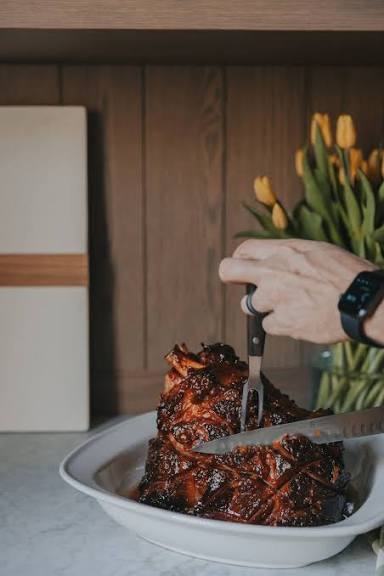
- Let it rest for at least 15 minutes before slicing. Serve with all the chaos, laughter, and second helpings a proper Easter meal deserves.
Because at the end of the day, Easter isn’t about the candy. It’s about the feast. The people. The stories. And most importantly, the damn good ham.
Ingredients
For the Ham:
- 1 bone-in, fully cooked ham (about 7-10 lbs, spiral-cut or whole—choose a low-sodium, nitrate-free option for a healthier choice)
- 1 cup water or low-sodium chicken broth (for the roasting pan)
For the Healthy Glaze:
- 1/2 cup pure maple syrup (natural sweetener, lower in processed sugars)
- 1/4 cup Dijon mustard (low-sodium, for a tangy kick without excess salt)
- 2 tablespoons apple cider vinegar (adds brightness and balances sweetness)
- 1 tablespoon fresh orange juice (for natural sweetness and vitamin C)
- 1 teaspoon ground cinnamon (for warmth and antioxidants)
- 1/2 teaspoon ground black pepper (for a subtle kick)
- 1/4 teaspoon ground cloves (optional, for a festive, aromatic flavor)
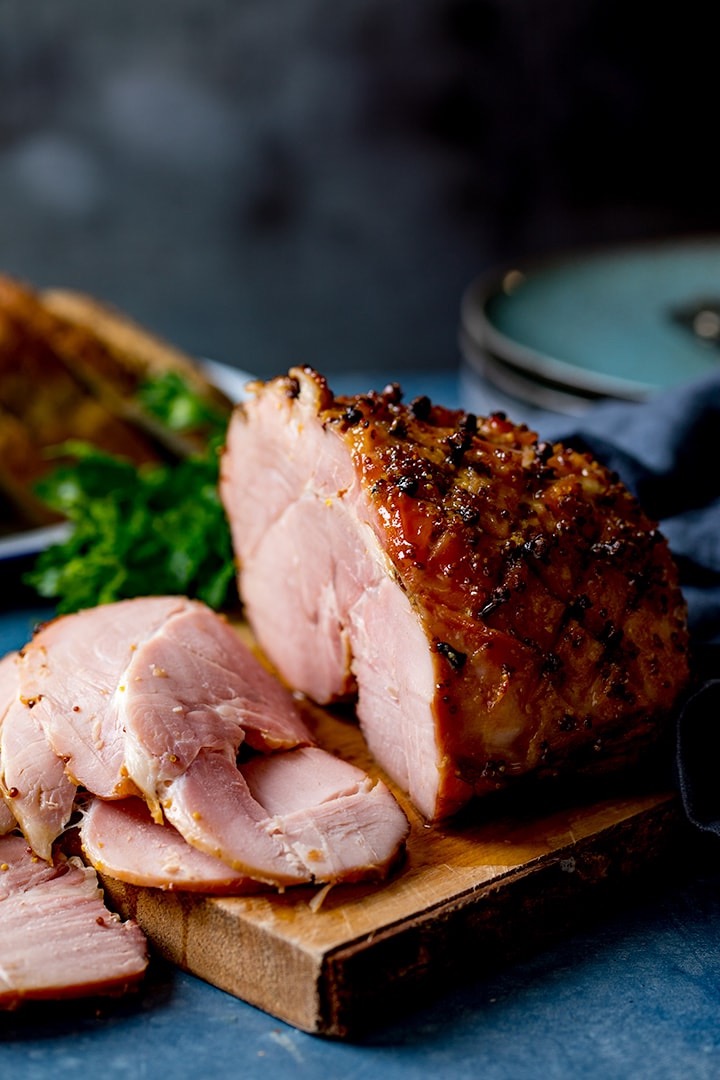
- 1 tablespoon whole-grain mustard seeds (optional, for texture and a healthy crunch, as seen in the photo)
Optional Garnishes (for Serving):
- Fresh parsley or thyme (for color and a touch of freshness, as seen in the photo)
- Orange slices (for a bright, healthy presentation)
Equipment Needed:
- Roasting pan with a rack
- Basting brush or spoon
- Aluminum foil
- Meat thermometer
- Sharp carving knife
Step-by-Step Instructions:
Step 1: Prepare the Ham
- Preheat the oven: Set your oven to 325°F (165°C) to create a gentle, even cooking environment.
- Trim the ham (if needed): If the ham has excess fat, trim it to about 1/4-inch thickness to reduce fat content while keeping it moist. Score the surface in a diamond pattern (about 1/4-inch deep) for better glaze absorption and a beautiful presentation.
- Place in the roasting pan: Set the ham on a rack in a roasting pan. Pour 1 cup of water or low-sodium chicken broth into the bottom of the pan to keep the ham moist and prevent it from drying out during cooking.
Step 2: Make the Healthy Glaze
- Combine ingredients: In a small saucepan over medium-low heat, whisk together the maple syrup, Dijon mustard, apple cider vinegar, orange juice, cinnamon, black pepper, and ground cloves (if using). Stir until the mixture is smooth and heated through, about 2-3 minutes. Remove from heat.
- Add mustard seeds (optional): If you want the crunchy texture seen in the photo, stir in the whole-grain mustard seeds after removing the glaze from heat.
Step 3: Apply the Initial Glaze
- Brush the ham: Use a basting brush or spoon to generously coat the ham with about half of the glaze. Ensure the glaze seeps into the scored lines for maximum flavor.
- Cover loosely with foil: Tent the ham loosely with aluminum foil to prevent it from drying out or burning, but allow some steam to escape.
Step 4: Roast the Ham
- Bake the ham: Place the ham in the preheated oven and roast for about 12-15 minutes per pound, or until the internal temperature reaches 140°F (60°C) when checked with a meat thermometer inserted into the thickest part (not touching the bone).
- Baste periodically: Every 30 minutes, remove the foil, brush the ham with more of the remaining glaze, and return it to the oven. This builds layers of flavor and creates the glossy, caramelized exterior seen in the photo.
Step 5: Finish with a Final Glaze
- Uncover and glaze: In the last 15-20 minutes of cooking, remove the foil completely. Brush the ham with the remaining glaze and sprinkle the whole-grain mustard seeds (if using) on top for extra crunch and visual appeal. Continue roasting until the glaze is sticky and slightly caramelized, and the ham reaches the target internal temperature.
- Watch closely: Keep an eye on the ham to ensure the glaze doesn’t burn—lower the oven temperature to 300°F (150°C) if it starts to darken too much.
Step 6: Rest and Carve
- Rest the ham: Remove the ham from the oven and transfer it to a cutting board. Let it rest for 15-20 minutes under a loose tent of foil. This allows the juices to redistribute, keeping the meat tender and moist.
- Carve the ham: Use a sharp carving knife to slice the ham, following the natural lines if it’s spiral-cut or cutting thin slices if it’s whole. Arrange the slices on a platter, as shown in the photo.
Step 7: Garnish and Serve
- Add garnishes: Sprinkle fresh parsley or thyme over the ham for a pop of color and freshness. Add a few orange slices around the platter for a bright, healthy touch.
- Serve warm: Present the ham on a wooden board or platter, alongside your favorite sides (e.g., roasted vegetables, sweet potatoes, or a light salad) for a balanced meal.
Nutritional Benefits:
- Low-sodium, nitrate-free ham: Reduces salt and harmful preservatives, making it a healthier protein choice.
- Maple syrup: A natural sweetener with antioxidants and fewer processed sugars than traditional glazes.
- Dijon mustard and apple cider vinegar: Low-calorie, tangy flavors with potential health benefits like improved digestion.
- Orange juice and cinnamon: Add vitamins, antioxidants, and natural sweetness without refined sugars.
- Whole-grain mustard seeds (optional): Provide fiber, healthy fats, and a crunchy texture.
This recipe keeps the ham juicy, flavorful, and visually appealing while minimizing unhealthy additives. It’s perfect for a special occasion like a holiday meal or family gathering, and the natural ingredients ensure it’s both delicious and nutritious. Enjoy!
 The Delicate Dish
Leave a comment