4.6 / 5 Based on Reviews
4.8/5 Based on Reviews
The Perfect Açaí Bowl: Bringing a Taste of the Tropics Home
There’s something almost mythical about açaí. Deep purple, nearly black, a color so rich it looks like it belongs in a painting rather than a breakfast bowl. It doesn’t just sit passively in a dish like some delicate pastry or artfully arranged salad. It commands attention, staining fingers and tongues, its boldness refusing to be ignored. It’s not just food—it’s fuel, tradition, a piece of the earth that doesn’t need embellishment to be extraordinary.
I didn’t always know this.
Back home, in the land of $12 smoothie bowls and overpriced health food trends, açaí was just another word thrown around by the wellness industry, a badge of superfood superiority. I saw it on menus in bright, sterile cafes where people in yoga pants and designer sneakers ordered it with extra coconut flakes and raw honey, chasing an idea of health rather than an experience of food. It was blended to oblivion, loaded with sweeteners, presented like a tropical dessert, a little too perfect, a little too polished. I didn’t get it.
Then I went to Brazil.
The first time I had açaí the way it was meant to be eaten, I was standing barefoot on the sand, sweat dripping down my back, the ocean stretching endlessly in front of me. The kind of beach where the sun burns so hot that even the waves feel warm, where the air smells of salt and coconut and grilled fish, and where time doesn’t seem to move the way it does in the rest of the world.
A guy—barefoot, sun-drenched, moving with the kind of effortless ease that only comes from a lifetime near the ocean—handed me a bowl. No frills, no unnecessary nonsense. Just thick, frozen açaí, dark and dense like wet cement, topped with granola, banana, and a drizzle of honey.
I took a bite. And suddenly, I understood.
It wasn’t the sugary, syrup-laden smoothie shop version I’d seen back home. This was something else entirely—earthy, slightly bitter, with an undertone of dark chocolate and ripe berries. It had a texture, a rawness, a kind of rugged authenticity that felt like a direct line to the Amazon itself. The granola added crunch, the banana smoothed out the edges, and the honey brought just enough sweetness to tie it all together. Simple. Honest. Perfect.
And in that moment, standing there with the sand between my toes and the waves rolling in, I realized something: food, at its best, is about place. About context. About understanding where something comes from and why it exists the way it does. Açaí wasn’t meant to be a designer food, a trendy health kick. It was something far older, far deeper than that.
The Real Story of Açaí
To understand açaí, you have to go back—way back—into the heart of the Amazon rainforest, where the berry has been a staple food for indigenous tribes for centuries. They weren’t eating it to lose weight or cleanse their systems or to get glowing skin. They were eating it to survive. To fuel long days of hunting, fishing, and life in a place that demands strength and endurance.
In the Amazon, açaí isn’t a breakfast bowl topped with coconut flakes and bee pollen. It’s served with dried fish and farinha (a coarse manioc flour). It’s dense, nutritious, packed with energy, and completely unsweetened. It’s not a treat; it’s sustenance. It’s eaten not because it’s trendy, but because it’s good. Because it keeps people going. Because it has for generations.
At some point, the Western world got ahold of açaí, and like it does with so many things, turned it into something else—something softer, sweeter, more Instagram-friendly. It became a wellness industry darling, a status symbol, a sign that you were eating clean and living right. But somewhere along the way, we lost what made it special in the first place.
Açaí doesn’t need to be complicated. It doesn’t need to be blended with almond milk or topped with a mountain of goji berries and cacao nibs. It doesn’t need a carefully curated aesthetic to make it worthy. It just needs to be eaten. Preferably somewhere warm, preferably with good company, preferably without the distractions of modern life buzzing in the background.
Bringing It Home
Of course, I can’t always be on a sun-soaked beach in Brazil with a fresh bowl of açaí in my hand. That’s the cruel reality of travel—you leave pieces of yourself in the places you fall in love with, but you can’t always take them with you.
But you can try.
And so, when I got home, I made it my mission to recreate that experience. Not the beach, not the sun, not the salt in the air—but the food. The real thing. I hunted down the frozen açaí packets, bypassed the syrupy blends, and set out to make something as close as possible to what I had that day on the sand.
How to Make the Perfect Açaí Bowl
The key to a great açaí bowl is restraint. Keep it simple. Respect the fruit. Let it shine without drowning it in unnecessary extras. The goal is to taste the açaí itself—not a dozen other flavors competing for attention.
Ingredients
For the Acai Base:
- 2 packets (about 100g each) frozen acai puree (unsweetened, available in most grocery stores or health food stores)
- 1 frozen banana (peeled and sliced before freezing for creaminess)
- 1/2 cup frozen blueberries (or mixed berries like raspberries)
- 1/2 cup almond milk (or any plant-based milk like oat, coconut, or regular milk—adjust for desired consistency)
- 1 teaspoon chia seeds (optional, for added nutrition and thickness)
- 1 teaspoon honey or maple syrup (optional, if you prefer a touch of sweetness)
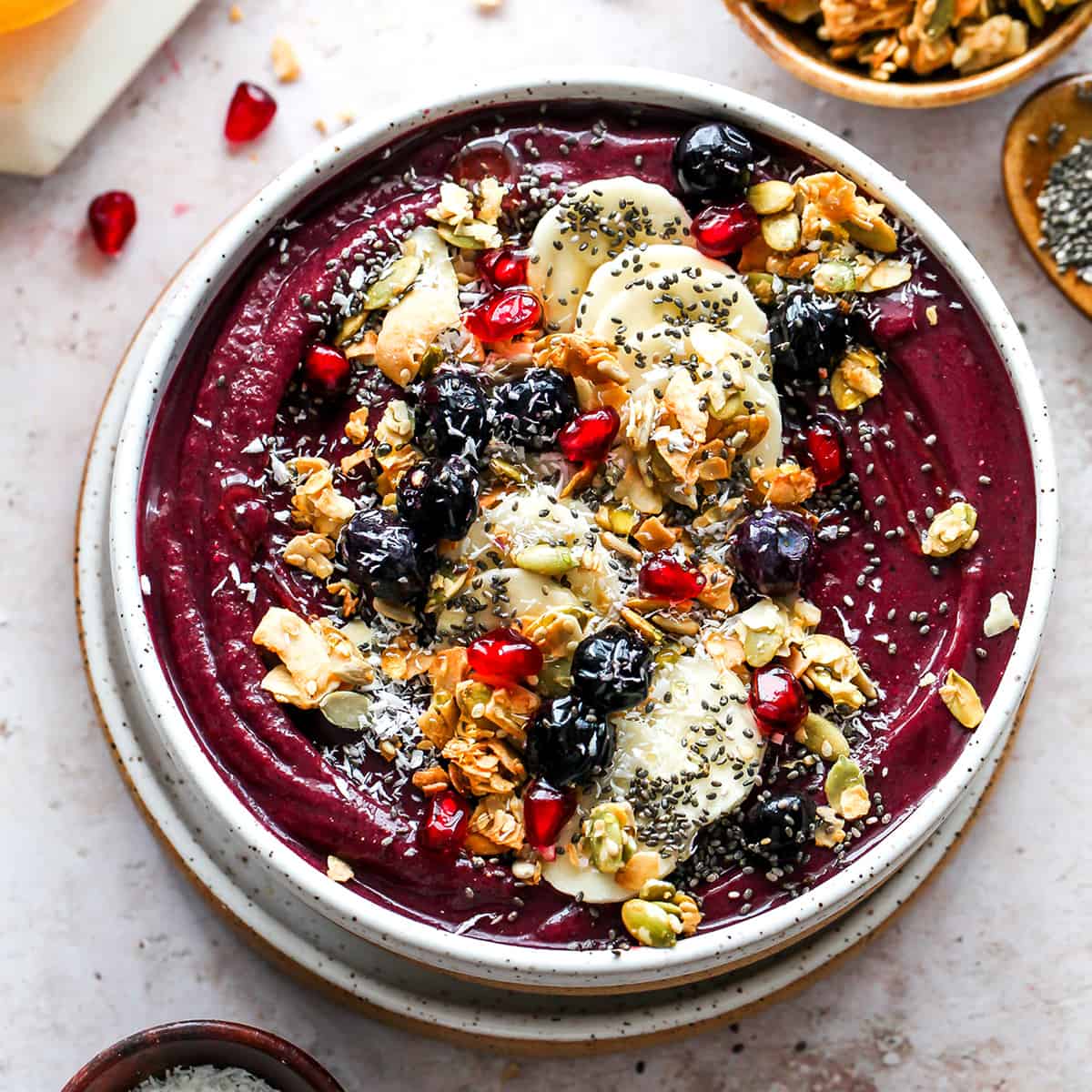
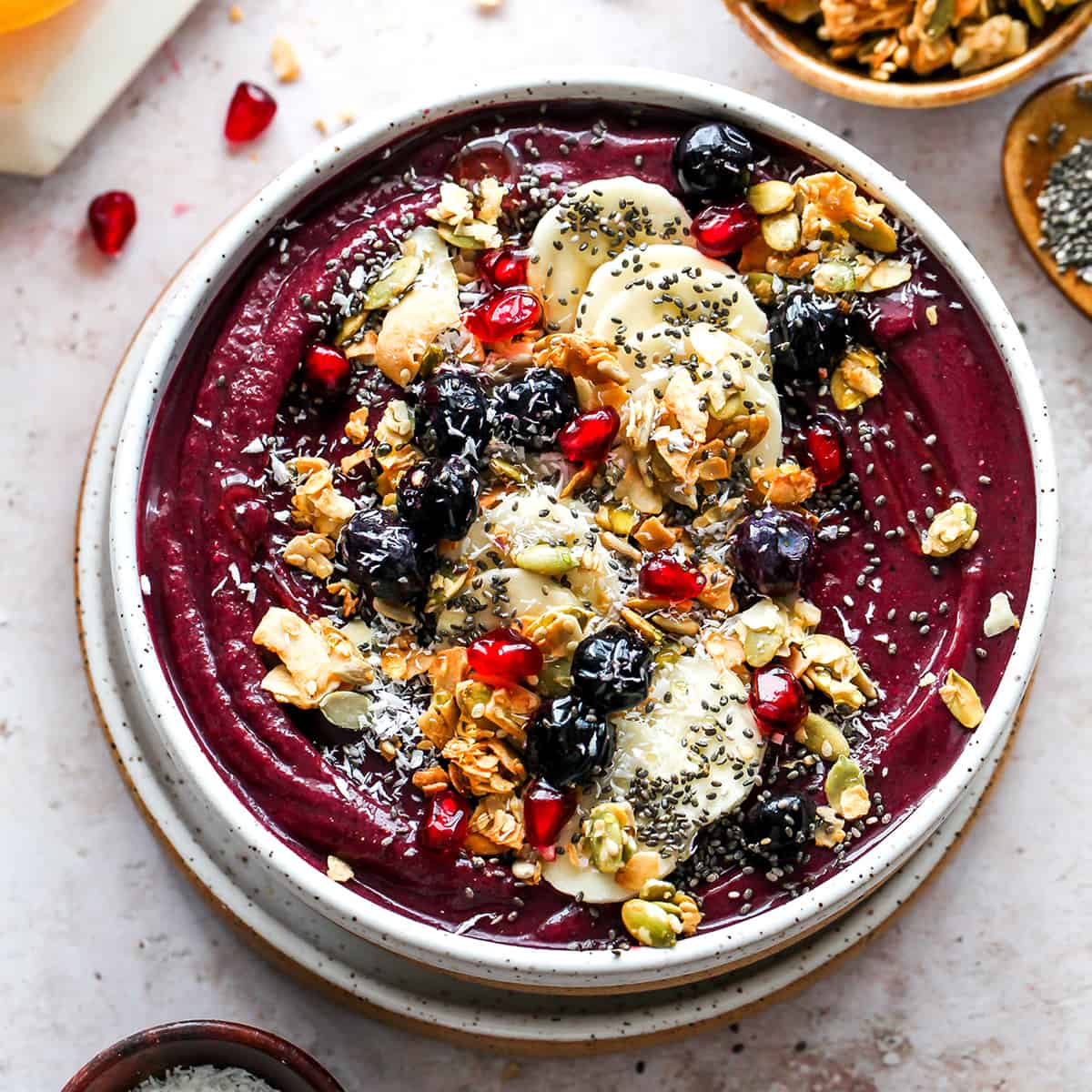
Toppings (as shown in the photo):
- 1 fresh banana, sliced
- 1/4 cup fresh blueberries
- 2 tablespoons pomegranate seeds (arils)
- 1/4 cup granola (choose low-sugar, whole-grain granola for a healthier option)
- 1 tablespoon chia seeds
- 1 tablespoon unsweetened coconut flakes
- 1 tablespoon pumpkin seeds (or sunflower seeds)
- A drizzle of honey or agave (optional, for extra sweetness)
Equipment Needed:
- Blender or food processor
- Bowl
- Spoon or spatula
Step-by-Step Instructions:
Step 1: Prepare the Acai Base
- Gather your frozen ingredients: Remove the acai puree packets from the freezer and let them sit at room temperature for 1-2 minutes to soften slightly (this makes blending easier, but don’t let them thaw completely).
- Add to the blender: Place the frozen acai puree, frozen banana slices, frozen blueberries, and 1/2 cup of almond milk into a high-speed blender or food processor.
- Blend until smooth: Start blending on low speed, then increase to high. Use the tamper (if your blender has one) or stop to scrape down the sides as needed. Blend until the mixture is thick and smooth, with a consistency similar to soft-serve ice cream. If it’s too thick, add a tablespoon of almond milk at a time until you reach the desired thickness. If you want extra nutrition, add the teaspoon of chia seeds and blend briefly.
- Taste and adjust: If you prefer a sweeter base, add 1 teaspoon of honey or maple syrup and blend again. Be careful not to over-blend, as the base should remain thick and scoopable, not runny.
Step 2: Assemble the Bowl
- Scoop the base: Spoon the acai mixture into a bowl. Use the back of the spoon to smooth it out evenly, creating a flat surface for the toppings.
Step 3: Add the Toppings
- Arrange the banana slices: Place fresh banana slices in a row or fan them out on one side of the bowl for visual appeal and a creamy, sweet contrast.
- Add blueberries: Scatter fresh blueberries over the top of the acai base, distributing them evenly for bursts of flavor and color.
- Sprinkle pomegranate seeds: Add pomegranate arils for a juicy, tangy crunch and a pop of red color.
- Add granola: Sprinkle 1/4 cup of granola over the bowl for a crunchy texture. Opt for a low-sugar, whole-grain version to keep it healthy.
- Include chia seeds: Sprinkle 1 tablespoon of chia seeds for an extra boost of fiber, omega-3s, and antioxidants.
- Top with coconut flakes: Add 1 tablespoon of unsweetened coconut flakes for a subtle sweetness and tropical flavor.
- Finish with pumpkin seeds: Sprinkle 1 tablespoon of pumpkin seeds for a nutty flavor and additional protein, healthy fats, and minerals.
- Drizzle with honey (optional): If you want a touch more sweetness, drizzle a small amount of honey or agave over the top.
Step 4: Serve and Enjoy
- Serve immediately with a spoon. Acai bowls are best enjoyed fresh, as the base can melt if left sitting too long. The combination of creamy acai, fresh fruits, crunchy granola, and seeds makes for a satisfying, nutrient-dense breakfast or snack.
Nutritional Benefits:
- Acai puree: Rich in antioxidants (like anthocyanins), fiber, and healthy fats.
- Bananas: Provide potassium, vitamin B6, and natural sweetness.
- Blueberries: Packed with antioxidants, vitamin C, and fiber.
- Pomegranate seeds: High in antioxidants, vitamin C, and potassium.
- Granola (low-sugar): Offers carbs and crunch, with whole grains for sustained energy.
- Chia seeds: Full of omega-3 fatty acids, fiber, and calcium.
- Coconut flakes: Provide healthy fats and a touch of sweetness.
- Pumpkin seeds: Rich in magnesium, zinc, and healthy fats.
This recipe is naturally gluten-free (if using gluten-free granola), dairy-free (if using plant-based milk), and can be vegan if you skip honey and use maple syrup. It’s a perfect balance of flavors and textures, making it both delicious and nourishing. Enjoy your homemade acai bowl!
 The Delicate Dish
Leave a comment